 Photo by ALEXANDRE LALLEMAND on Unsplash
EU MDR 2017/745
This comprehensive training programme provides a practical and regulatory-focused understanding of Regulation (EU) 2017/745 (EU MDR) and its application across the complete medical device lifecycle. Covering 20 structured modules, the course explores classification, economic operators, technical documentation, GSPR, conformity assessment, risk management, EUDAMED, UDI, labelling, clinical evaluation and investigation, PMS, vigilance, QMS and CE certification.
Designed for regulatory, quality, clinical, engineering and post-market professionals, the programme combines regulatory requirements with practical documentation and compliance considerations, enabling participants to confidently support MDR-compliant, audit-ready medical device processes and documentation.
The doubt-clearing session is available every week, subject to demand. Please share your specific queries in advance at neulearn@neujinsolutions.com. You will be informed of the date and time in advance.
Stay in touch, participate in Q&A and connect with other learners via our community 'EU MDR', Click https://neujinsolutions.heightsplatform.com/discuss/eu-mdr to join the community.
Note: The certificate will be emailed upon successful course completion and receipt of your course feedback.
23 Lessons
Already Joined? Login
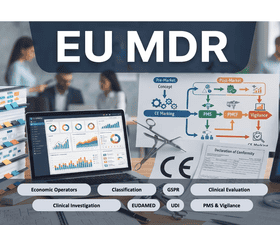
Introduction to the course
This course provides comprehensive training on the European Union Medical Device Regulation (EU) 2017/745, covering the regulatory framework, classification, technical documentation, GSPR, conformity assessment, risk management, clinical evidence, registration, traceability, PMS, vigilance, quality management, and certification. Across 20 structured modules, participants develop practical skills to apply EU MDR requirements and contribute to compliant, audit-ready technical documentation.
Introduction to EU MDR
This module introduces the legal and regulatory framework of the EU MDR, covering the key differences between a regulation and a directive, the transition from MDD 93/42/EEC to Regulation (EU) 2017/745, and the MDR’s implementation and transition timelines. It also explains the Regulation’s objectives, the lessons from the PIP scandal, the definition and scope of medical devices, Annex XVI products, distance sales, and CE marking requirements.

Economic Operators
This module covers the roles and responsibilities of EU MDR economic operators, including manufacturers, authorised representatives, importers, distributors, and producers of systems and procedure packs. It addresses Article 10 obligations, PRRC requirements, clinical evaluation, technical documentation, PMS, risk management, reprocessing of single-use devices, and manufacturer responsibilities, including requirements for re-packagers and re-labellers.

Roles of Regulators
This module introduces the EU MDR regulatory framework and key authorities, including the European Parliament, Council, European Commission, Competent Authorities, MDCG, and Notified Bodies. It covers their roles in guidance, standards, Common Specifications, conformity assessment, Notified Body designation, and expert consultation, including the functions of NANDO, Expert Panels, Expert Laboratories, and EMA.
Classification
This module covers the risk-based classification of medical devices under Annex VIII, including Classes I, IIa, IIb and III and Class I subcategories. It explains duration of use, contact location, and the 22 classification rules for non-invasive, invasive, active, and special devices, with focus on Rule 11 for software, up-classification triggers, MDCG examples, and classification dispute resolution
Technical Documentation
This module covers the EU MDR technical documentation requirements under Annexes II, III and IV, including device description, Basic UDI-DI, labelling and IFU, design and manufacturing information, GSPR compliance, risk management, verification and validation, preclinical and clinical evidence, and special requirements for sterile, measuring, and substance-containing devices. It also covers the Declaration of Conformity, clinical evaluation, and PMS documentation.

Declaration of Conformity
This module covers the EU MDR Declaration of Conformity (DoC), including its purpose, mandatory contents, preparation, translation, updating, and retention requirements. It also explains the responsibilities of the manufacturer, PRRC, authorised representative, and importer, along with Notified Body and certificate details.

General Safety & Performance Requirements (GSPR)
This module covers the General Safety and Performance Requirements (GSPR) under Annex I, including their structure, applicability, and methods for demonstrating compliance. It addresses risk management, design and manufacturing requirements, software, biological and chemical safety, infection control, labelling/IFU, and the role of harmonised standards and Common Specifications.
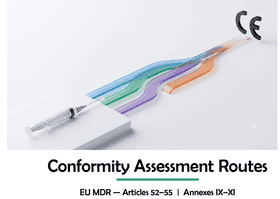
Conformity Assessment Routes
This module covers EU MDR conformity assessment procedures under Articles 52–55 and Annexes IX–XI, explaining routes based on device classification. It addresses Class I self-certification, Notified Body involvement, QMS and product-verification routes, Type Examination, Class III requirements, expert consultations, specialised timelines, and system/procedure packs.
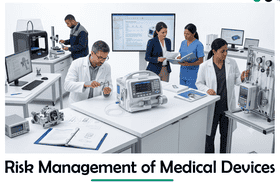
Risk Management
This module covers medical device risk management under ISO 14971:2019, including hazard identification, risk estimation and evaluation, risk-control measures, residual risk, ALARP, benefit-risk analysis, and overall residual-risk evaluation. It also addresses the risk management process, team responsibilities, and Risk Management File
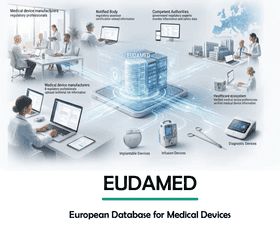
EUDAMED
This module covers EUDAMED, including its six modules, registration requirements, key identifiers such as SRN and Basic UDI-DI, access rights, and applicable compliance timelines. It also introduces the European Medical Device Nomenclature (EMDN) and its role in MDR technical documentation.
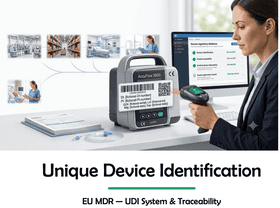
UDI System & Traceability
This module covers the EU MDR UDI system and its role in device traceability. It explains Basic UDI-DI, UDI-DI, UDI-PI, UDI carriers, issuing entities, device-specific requirements, compliance timelines, direct marking, and criteria for assigning a new UDI-DI, including identification of legacy devices in EUDAMED.
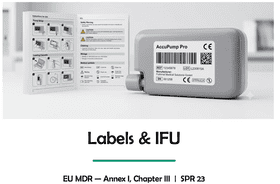
Labelling
This module covers EU MDR labelling and Instructions for Use (IFU) requirements under Annex I, SPR 23, including language, symbols, label content, sterile packaging information, CMR/endocrine-disrupting substances, reprocessed single-use devices, and the expanded IFU requirements.
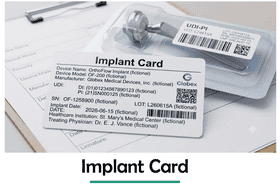
Implant Card
This module covers the EU MDR Implant Card requirements under Article 18, including its purpose, required information, applicable devices, and patient traceability. It also addresses MDCG 2019-8 guidance, UDI presentation, recognised symbols, healthcare facility entries, and the Informative and Patient Information Leaflets.

Clinical Evaluation
This module covers clinical evaluation under Article 61 and Annex XIV, including clinical evidence, equivalence, benefit-risk assessment, and clinical investigation requirements. It also addresses clinical evaluation planning, the four-stage evaluation process, and key documents such as the CEP, CER, and SSCP

Clinical Investigation
This module covers clinical investigations under EU MDR Articles 62–82 and Annex XV, including when investigations are required, objectives, ISO 14155 alignment, ethical and regulatory approvals, informed consent, vulnerable populations, and the Clinical Investigation Plan. It also addresses GDPR requirements, data controllers, and processors in clinical investigations.

Post-Market Surveillance & PMCF
This module covers Post-Market Surveillance (PMS) under EU MDR Articles 83–86, including PMS planning, data collection, reporting, and EUDAMED requirements. It explains the PMS Report, PSUR, and PMCF, including their applicability, update frequencies, methods, objectives, and documentation of results.

Vigilance
This module covers EU MDR vigilance requirements, including incident and serious incident reporting, FSCAs, recalls, withdrawals, and field safety notices. It explains EUDAMED reporting pathways, statutory timelines, periodic summary reports, and trend reporting for significant increases in non-serious incidents or expected side-effects.

Quality Management System (QMS)
his module covers the EU MDR Quality Management System (QMS) requirements under Article 10(9) and its relationship with EN ISO 13485:2016+A11:2021. It addresses the key QMS elements, including regulatory compliance, GSPR, UDI, design and production, clinical evaluation, risk management, PMS, vigilance, CAPA, and PRRC responsibilities, along with additional MDR-specific requirements.
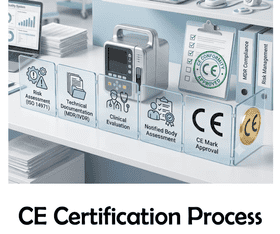
CE Certification Process
This module covers the end-to-end CE certification lifecycle, from pre-application and Notified Body review through conformity assessment, certification, and ongoing surveillance. It explains application review, assessment planning, QMS and technical documentation audits, clinical evaluation review, non-conformity/CAPA, final decision, certificate issuance, and post-certification surveillance.

Course Summary
This concluding module integrates the key concepts from the 19 preceding modules into a complete EU MDR compliance lifecycle. It connects regulatory roles, classification, technical documentation, conformity assessment, risk management, EUDAMED, UDI, clinical evidence, PMS, vigilance, QMS, and certification, highlighting how each element supports continuous compliance and patient safety.